
Blockchain
1 month ago
What Is Land Tokenization? How Blockchain Is Changing Real Estate Investment in 2026
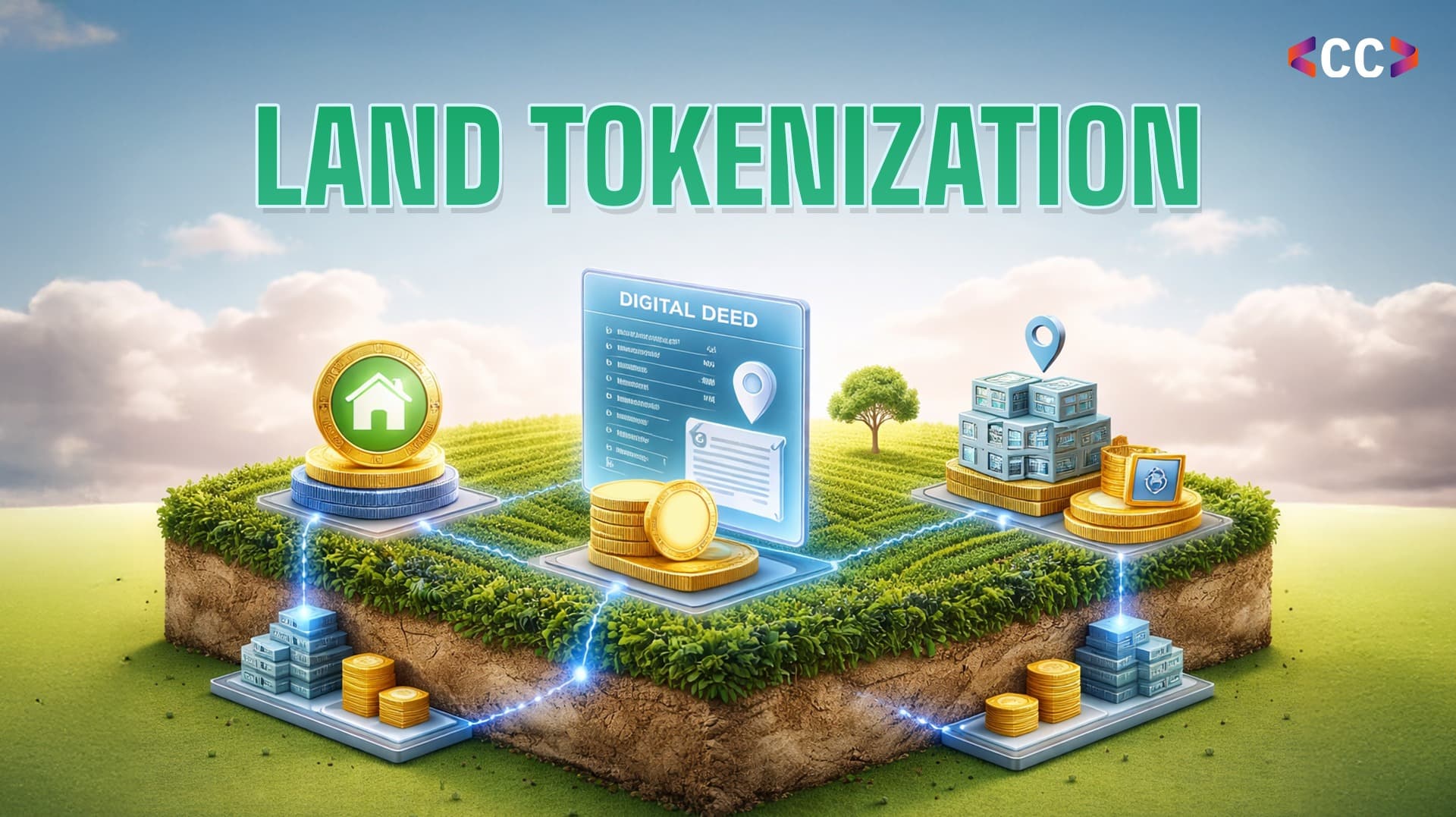
Land Tokenization Explained: A Beginner-Friendly Guide to Tokenized Real Estate
Land tokenization is rapidly emerging as one of the most searched topics in blockchain real estate investment—and for good reason. At its core, land tokenization is the process of converting physical real estate assets into digital tokens recorded on a blockchain network. These tokens represent fractional ownership of a property, allowing investors to buy, sell, or trade real estate in a more flexible and efficient way.
Unlike traditional property transactions that involve paperwork, intermediaries, and lengthy settlement cycles, blockchain-based property ownership operates on a decentralized ledger. Every transaction is transparent, immutable, and verifiable. This dramatically reduces fraud risk while improving compliance and operational efficiency.
Through real estate tokenization platforms, investors can access global markets with significantly lower capital requirements. Instead of purchasing an entire property, individuals can invest in fractional shares—unlocking exposure to high-value land assets that were previously limited to institutional investors.
As blockchain adoption accelerates across industries, companies specializing in enterprise-grade blockchain implementation—such as ChainCode Consulting—are helping businesses design secure, scalable tokenization ecosystems tailored to regulatory and market requirements.
Why Land Tokenization Is Gaining Momentum Among Modern Investors
Key Benefits of Tokenized Property Investment
Land tokenization is not just a technological upgrade—it fundamentally reshapes how real estate capital markets function. Here are the core advantages driving adoption:
1. Fractional Ownership and Lower Entry Barriers
Tokenized real estate enables micro-investments. Investors can allocate capital into high-value properties without needing full acquisition funding. This increases accessibility and portfolio diversification.
2. Improved Liquidity in Traditionally Illiquid Markets
Real estate has historically been illiquid. Blockchain-based land tokens can be traded on digital asset marketplaces, enabling faster entry and exit compared to conventional property sales.
3. Transparent and Immutable Transactions
Blockchain records provide a tamper-proof history of ownership and transactions. Smart contracts automate processes such as dividend distribution, governance voting, and ownership transfer.
4. Global Investment Access
Tokenization eliminates geographical limitations. International investors can participate in property markets without navigating complex cross-border transaction structures.
With properly designed blockchain architecture and compliance layers, tokenized real estate can significantly reduce operational friction. Firms experienced in blockchain infrastructure development play a critical role in ensuring legal robustness and technical scalability.
How Land Tokenization Works: Step-by-Step Process
Understanding the technical and legal mechanics behind tokenizing land assets is essential for investors and developers alike.
Step 1: Asset Selection and Due Diligence
A property is identified and evaluated. This includes title verification, valuation, legal clearance, and compliance assessment.
Step 2: Legal Structuring and Regulatory Alignment
A Special Purpose Vehicle (SPV) or trust structure is typically created to hold the property. Token holders own shares of this entity rather than the land directly. Clear legal documentation defines investor rights, revenue sharing, and governance.
Step 3: Smart Contract Development
Smart contracts are programmed to automate ownership distribution, dividend payments, compliance checks, and secondary trading rules. This is where blockchain engineering expertise becomes crucial.
Step 4: Token Creation on a Blockchain Network
Digital tokens are minted on a blockchain platform (such as Ethereum or other enterprise-grade networks). Each token represents fractional ownership.
Step 5: Token Offering and Secondary Trading
Tokens are offered to investors via compliant digital platforms. Once issued, they may be traded subject to regulatory frameworks.
Proper implementation requires not just blockchain coding but also deep understanding of token economics, compliance design, and secure smart contract auditing—areas where specialized blockchain consulting firms add measurable value.
Real-World Use Cases of Land Tokenization
Land tokenization is already operational in multiple regions worldwide. Some prominent use cases include:
Commercial Property Token Sales in Europe
Several commercial real estate assets have been successfully fractionalized and offered to global investors via blockchain-based platforms. These projects demonstrated improved capital raising efficiency and broader investor participation.
Agricultural Land Tokenization in Emerging Markets
Farmland has been tokenized to allow small-scale investors to gain exposure to agricultural yield. This model enhances funding access for landowners while providing diversified investment opportunities.
Luxury Residential Developments
High-end residential properties are being divided into digital shares, enabling shared ownership models without traditional co-investment complexity.
These examples signal a structural shift toward digital land investment platforms becoming mainstream in property finance.
SEO Spotlight: Why “Tokenized Real Estate Investment” Is a Growing Search Trend
Search data shows increasing interest in:
- Land tokenization platforms
- Blockchain in real estate
- Fractional property ownership
- Digital real estate investment
- Real estate asset tokenization
This surge reflects growing investor awareness of blockchain’s practical applications beyond cryptocurrencies.
As regulatory clarity improves and institutional adoption expands, tokenized land assets are expected to become a core component of alternative investment portfolios.
The Future of Property Investment: Why 2026 Is a Turning Point
The intersection of blockchain technology and real estate is not speculative—it is operational and expanding.
Key drivers shaping the future include:
- Rising demand for digital asset diversification
- Institutional experimentation with tokenized funds
- Regulatory frameworks adapting to digital securities
- Growing investor appetite for alternative assets
Industry analysts predict that tokenized real estate could represent a multi-trillion-dollar market within the next decade.
Forward-thinking developers, property firms, and investment groups are already exploring blockchain integration strategies. Partnering with experienced blockchain solution providers ensures that tokenization initiatives are secure, compliant, and scalable from day one.
Is Land Tokenization the Smartest Real Estate Strategy Today?
Land tokenization represents a paradigm shift in how property ownership and investment function. By enabling fractional ownership, enhancing liquidity, and embedding transparency through blockchain, it modernizes one of the world’s oldest asset classes.
For investors, it offers diversification and accessibility.
>For developers, it unlocks global capital pools.
>For the real estate industry, it signals digital transformation.
As blockchain infrastructure continues to mature, those who understand and adopt tokenization early will be strategically positioned in the evolving property investment ecosystem.
If you’re exploring how blockchain can reshape your real estate model, now is the time to evaluate scalable, compliant tokenization frameworks—and ensure the underlying technology is built for long-term growth.