Blockchain
1 month ago
What Are Decentralized Applications (dApps)? How They’re Reshaping the Future of the Internet in 2026
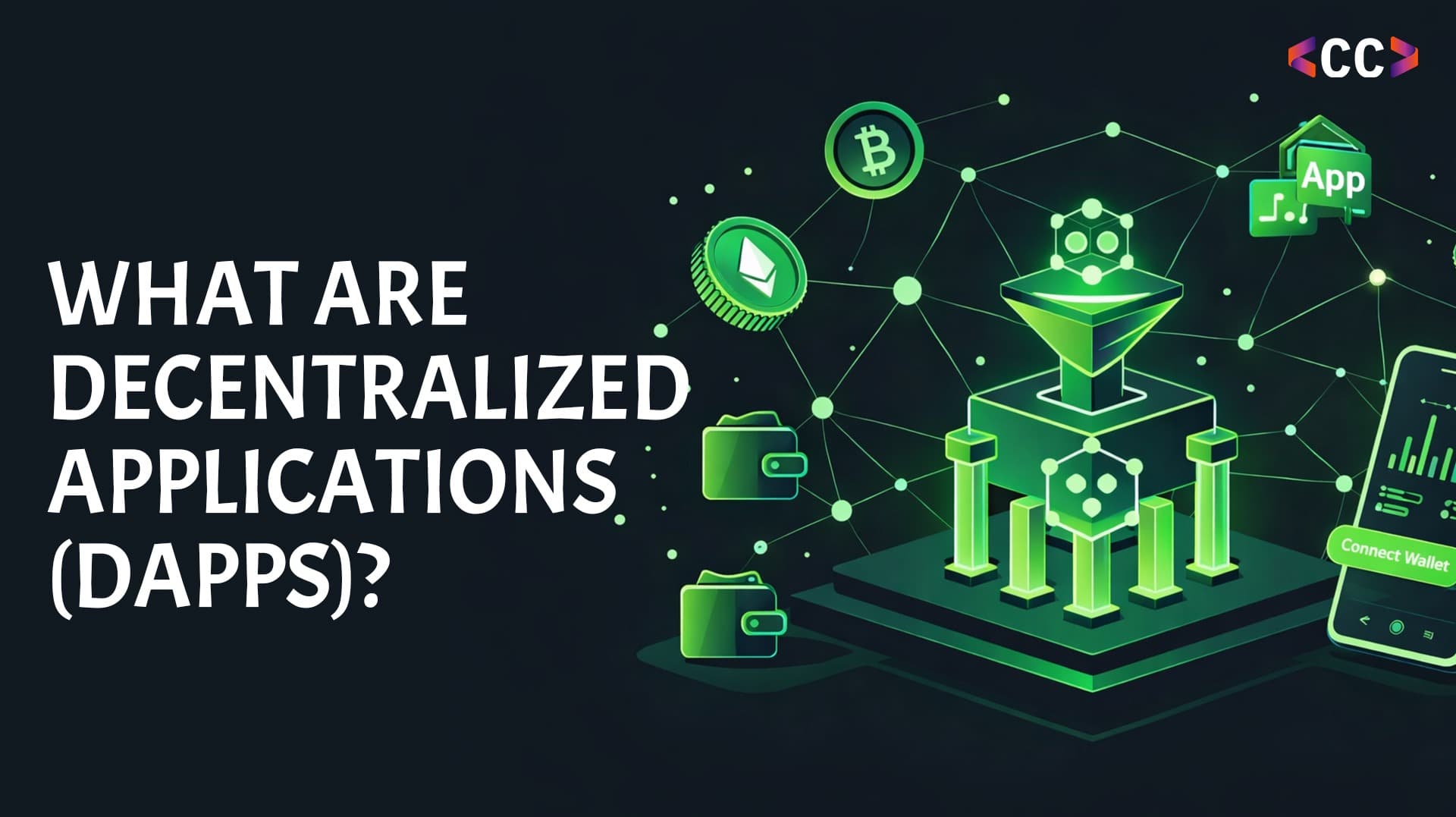
The internet is undergoing a structural evolution. As businesses and users demand greater privacy, transparency, and ownership, decentralized applications commonly known as dApps are emerging as the backbone of Web3 innovation.
If you’ve been searching for terms like “what is a decentralized application,” “how dApps work,” or “benefits of blockchain apps,” this guide breaks it down clearly and strategically.
Understanding Decentralized Applications: How Do dApps Actually Work?
A decentralized application (dApp) operates on blockchain infrastructure rather than centralized servers. Instead of relying on a single authority to manage data, decentralized apps distribute control across a network of independent nodes.
At the core of most dApps is a distributed ledger—commonly powered by platforms like Ethereum—where transactions are recorded transparently and immutably.
Here’s how they function:
- Smart contracts automate execution logic.
- Peer-to-peer (P2P) networks validate transactions.
- Blockchain ledgers store transaction history securely.
- Cryptographic keys give users control over their assets.
Unlike traditional applications:
- There is no single point of failure.
- Data cannot be easily altered.
- Users maintain custody of digital assets.
This architecture creates systems that are trust-minimized, censorship-resistant, and transparent by design.
Why Businesses Are Adopting Decentralization Applications
Organizations across finance, gaming, supply chain, and digital identity sectors are increasingly integrating decentralized systems. Why?
1. Enhanced Security Through Distributed Architecture
Centralized databases are prime targets for cyberattacks. dApps distribute data across nodes, significantly reducing systemic vulnerabilities.
2. Transparency and Verifiable Records
Every transaction is recorded on-chain, making audit trails accessible and immutable.
3. User Data Ownership
Unlike Web2 platforms that monetize user data, decentralized applications enable true digital ownership.
4. Censorship Resistance
Without centralized control, content or transactions cannot be arbitrarily restricted.
5. Trustless Transactions
Smart contracts execute pre-defined logic automatically—removing reliance on intermediaries.
These advantages are driving enterprise-level exploration of blockchain application development. Experienced blockchain consulting firms, including ChainCode Consulting, increasingly help businesses architect secure, scalable decentralized infrastructures tailored to industry-specific requirements.
Real-World Examples of Decentralized Applications
Decentralization is not theoretical—it is operational across multiple sectors.
Ethereum-Based dApps
Many decentralized applications are built on Ethereum, enabling:
- DeFi lending protocols
- Governance voting systems
- NFT minting platforms
- DAO frameworks
Decentralized Exchanges (DEXs)
Platforms such as Uniswap and SushiSwap allow peer-to-peer cryptocurrency trading without intermediaries.
NFT Marketplaces
OpenSea enables artists and creators to monetize digital assets directly through blockchain authentication.
Decentralized Social Platforms
Mastodon exemplifies community-controlled social networking, where users maintain content ownership.
These examples highlight a critical shift: decentralization is redefining ownership, finance, and online engagement.
Key Challenges Facing Decentralized Applications
Despite rapid growth, decentralized applications face structural hurdles.
Scalability Limitations
High network congestion can lead to slow transactions and elevated fees—especially on Layer 1 blockchains.
User Adoption Barriers
Wallet setup, private key management, and blockchain terminology create friction for non-technical users.
Regulatory Uncertainty
Global regulatory frameworks for digital assets remain inconsistent, impacting compliance strategies.
Interoperability Constraints
Different blockchain ecosystems often lack seamless integration, limiting cross-chain asset mobility.
Overcoming these limitations requires both technological innovation and strategic architecture planning. Forward-thinking blockchain solution providers focus on scalable Layer 2 implementations, compliance-ready smart contract design, and interoperable frameworks to address these systemic challenges.
The Future of Decentralization Applications: Web3 in 2026 and Beyond
The rise of Web3 signals a fundamental transition from platform-controlled ecosystems to user-owned networks.
Key trends shaping the future include:
- Growth of DAO governance models
- Expansion of decentralized finance (DeFi)
- NFT utility beyond collectibles
- Tokenized real-world assets
- Cross-chain interoperability solutions
- Privacy-enhancing technologies such as zero-knowledge proofs
The Web 3.0 evolution represents more than a technological upgrade—it represents a digital ownership revolution.
In this model:
- Users control identity credentials.
- Creators monetize directly.
- Communities govern collectively.
- Transactions are transparent and programmable.
Organizations positioning themselves early within decentralized ecosystems gain competitive advantage in transparency, trust, and innovation.
Why Businesses Should Explore dApp Development Today
If you are:
- A startup founder exploring tokenized platforms
- An enterprise modernizing digital infrastructure
- A fintech innovator seeking trustless systems
- Or a Web3 entrepreneur building next-generation applications
Now is the strategic window.
Decentralized applications are not replacing the internet—they are upgrading its trust architecture.
Collaborating with experienced blockchain development teams ensures:
- Secure smart contract deployment
- Scalable infrastructure design
- Compliance-ready frameworks
- Interoperability across ecosystems
As Web3 adoption accelerates, the difference between experimentation and structured implementation will define long-term success.
The Internet Is Decentralizing – Will You Be Part of It?
Decentralized applications represent one of the most significant architectural transformations in internet history. By eliminating centralized control and embedding trust into code, dApps redefine how value, identity, and data move online.
The shift is already underway.
Businesses and developers who understand decentralized systems today will help shape the digital economy of tomorrow.
The question is no longer whether decentralization will impact your industry.
It’s how soon you choose to build within it.