
Blockchain
11 hours ago
Tokenisation of Real-World Assets: What It Is, How It Works, and What It Means for Your Business
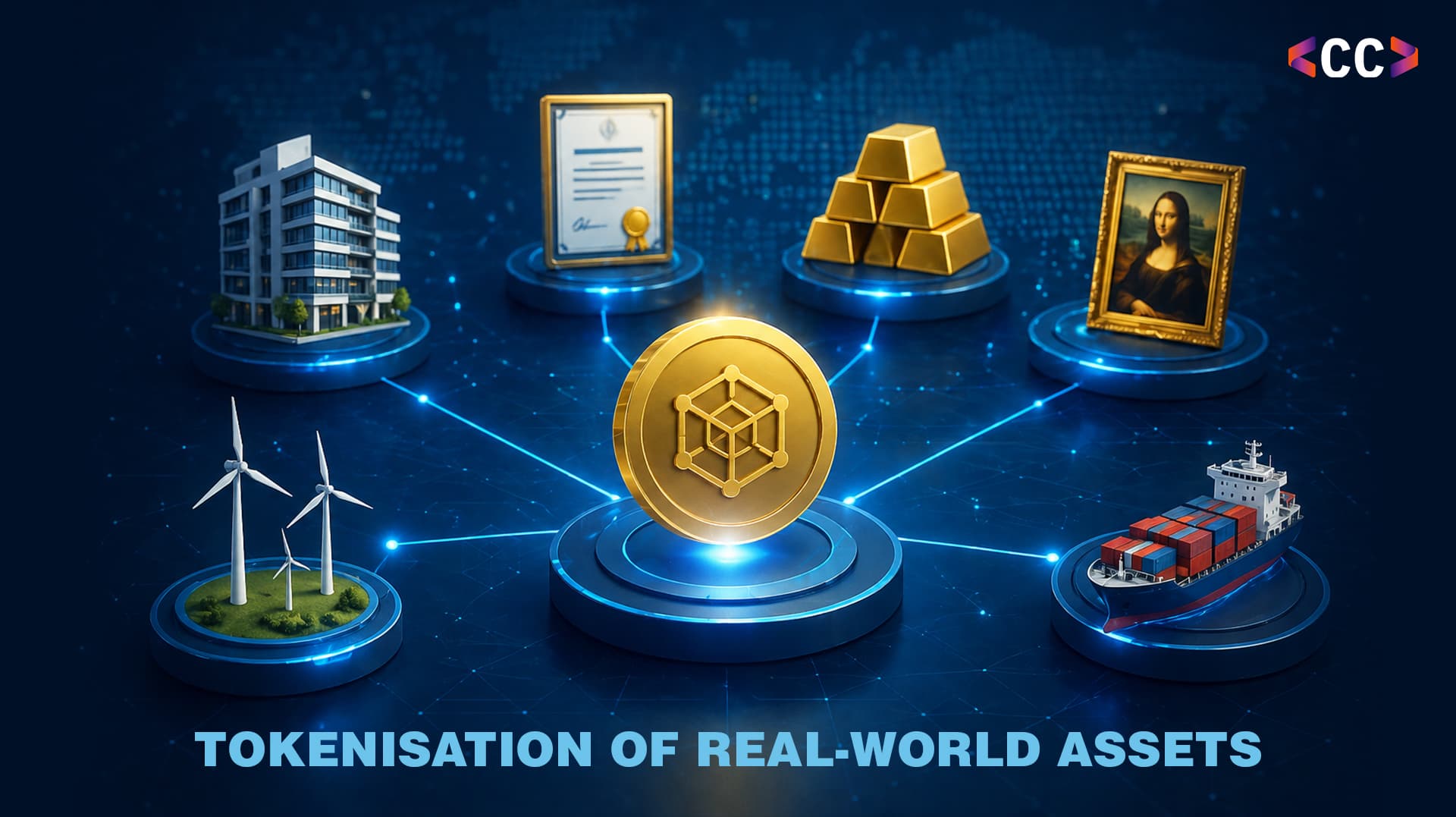
In 2023, BlackRock – the world’s largest asset manager – launched a tokenised fund on a public blockchain. JPMorgan has processed over $700 billion in tokenised short-term loans through its blockchain platform. Franklin Templeton moved its government money market fund onto a blockchain network.
These aren’t experiments. They’re signals that the tokenisation of real-world assets is rapidly moving from fringe concept to mainstream financial infrastructure – and the window for early movers is still open.
But for most business leaders outside of institutional finance, the term “tokenisation” still sounds abstract. What does it actually mean? Which assets can be tokenised? And is it relevant to your business – or just for Wall Street?
This guide answers all of those questions in plain English. No cryptocurrency hype. No unnecessary jargon. Just a clear explanation of what this technology does and what it could mean for your organisation.
What Does “Tokenisation” Actually Mean?
Tokenisation is the process of converting ownership rights in a real-world asset into a digital token that lives on a blockchain. Think of it like creating a digital share certificate – except instead of being stored in a filing cabinet or a central registry, it exists on a distributed ledger that is transparent, tamper-proof, and accessible globally.
Each token represents a defined unit of ownership in the underlying asset. That could be a fraction of a commercial property, a portion of a private equity fund, a quantity of gold, or a share in a piece of infrastructure. The token is programmable – it can carry rules about who can own it, how it can be transferred, and how income from the asset gets distributed.
The Difference Between a Token and a Cryptocurrency
This is the most common point of confusion – and it’s worth addressing directly.
A cryptocurrency like Bitcoin is a digital currency with no underlying physical asset. Its value is driven by supply, demand, and market sentiment. A real-world asset token is fundamentally different: it represents ownership of something tangible and valuable that exists independently of the blockchain – a building, a bond, a bar of gold.
Investing in a tokenised property fund is no more speculative than buying a share in a real estate investment trust. The blockchain is simply the mechanism for recording and transferring ownership – not the source of value.
Which Real-World Assets Can Be Tokenised?
The short answer: almost any asset with defined value and transferable ownership rights. In practice, the most active areas of RWA tokenisation across blockchain platforms today include:
Real Estate
Commercial and residential property tokenised into fractions, enabling investors to participate in markets previously requiring millions in capital.
Private Equity & Funds
Stakes in private companies and investment funds tokenised to improve liquidity and lower minimum investment thresholds.
Commodities
Gold, silver, oil, and agricultural commodities represented as tokens, enabling instant settlement and fractional trading.
Bonds & Fixed Income
Government and corporate bonds issued on-chain, reducing issuance cost, settlement time, and administrative overhead.
Art & Collectibles
High-value artworks and rare collectibles fractionalised, giving multiple investors shared ownership of otherwise inaccessible assets.
Infrastructure
Renewable energy projects, toll roads, and public infrastructure tokenised to broaden the investor base and streamline revenue distribution.
The common thread across all of these is the same: tokenisation takes an asset that was previously illiquid, expensive to access, or administratively burdensome – and makes it more efficient to own, transfer, and trade.
How the Tokenisation Process Works – Step by Step
Here’s what actually happens when a real-world asset is tokenised:
- Asset selection and valuation. The asset owner decides which asset to tokenise and commissions an independent valuation. The total value determines how many tokens will be issued and at what price per token.
- Legal structuring. A legal wrapper is created – typically a special purpose vehicle (SPV) or a trust – that holds the underlying asset and defines the rights that token holders receive. This is where regulatory compliance is established.
- Smart contract creation. The ownership rules are encoded into smart contracts on the chosen blockchain. These govern who can hold the token, how transfers occur, how dividends or rental income are distributed, and what happens in specific scenarios (such as a sale of the underlying asset).
- Token issuance. Tokens are minted and made available to investors – either via a private placement to institutional investors or through a regulated token offering platform.
- Secondary market trading. Once issued, tokens can be traded on regulated digital securities exchanges, giving token holders liquidity that traditional illiquid assets cannot offer.
The Role of Smart Contracts in Tokenisation
Smart contracts are the engine that makes tokenisation practical. They automatically enforce the ownership rules embedded at issuance – distributing rental income to token holders on a set schedule, blocking transfers to non-compliant investors, and executing buybacks when triggered by predefined conditions.
This removes entire layers of fund administration, custodial services, and manual reconciliation – replacing them with code that runs automatically.
Key Business Benefits of RWA Tokenisation
For organisations evaluating tokenisation – whether as asset owners, fund managers, or investors – these are the benefits that drive adoption:
- Unlocking liquidity in illiquid assets. Real estate, private equity, and infrastructure have traditionally been illiquid – once invested, capital is locked in for years. Tokenisation creates a secondary market, allowing investors to exit positions without waiting for asset disposal.
- Fractional ownership at scale. Fractional ownership via blockchain lowers the minimum investment threshold dramatically. A commercial property worth £50 million can be divided into 50,000 tokens at £1,000 each – opening it to a far wider investor base without changing the underlying asset structure.
- Global investor access. Tokens can be offered to investors across borders in a way that physical asset transfer cannot. Subject to regulatory compliance, a property in Dubai can attract capital from Singapore, London, and New York simultaneously.
- Faster, cheaper settlement. Traditional securities settlement takes two to three business days and involves multiple intermediaries. Token transfers settle in minutes on-chain, with a fraction of the transaction cost.
- Transparency and auditability. Every token holder, every transfer, and every income distribution is recorded permanently on the blockchain. For fund managers and regulators, this is a significant compliance and governance advantage.
- Reduced administrative costs. Smart contracts automate the functions traditionally performed by transfer agents, registrars, and fund administrators – reducing overhead on an ongoing basis.
Real-World Examples: Who Is Already Doing This?
The fastest way to understand the scale of the opportunity is to look at who is already deploying it:
- BlackRock launched its BUIDL tokenised fund on the Ethereum blockchain in 2024, offering institutional investors access to US Treasury bill yields through a tokenised structure. It crossed $500 million in assets within weeks of launch.
- JPMorgan’s Onyx platform has processed hundreds of billions of dollars in tokenised collateral and short-term lending transactions between major financial institutions since 2020 – operating quietly but at enormous scale.
- Franklin Templeton moved its government money market fund onto both the Stellar and Polygon blockchains, making it one of the first US-registered mutual funds to use a public blockchain for transaction processing and share ownership records.
- The World Bank and European Investment Bank have both issued digital securities on blockchain networks, demonstrating that sovereign and supranational institutions view this as viable infrastructure – not a speculative experiment.
These are not startups. They are the most conservative and heavily regulated institutions in global finance. Their adoption is the strongest possible signal that tokenisation of real-world assets is a structural shift – not a trend.
Risks and Regulatory Considerations to Understand
A balanced assessment requires acknowledging the challenges alongside the opportunity:
- Regulatory fragmentation. The legal treatment of tokenised assets varies significantly by jurisdiction. What constitutes a security, who can hold tokens, and how offerings must be structured differs between the US, EU, UK, Singapore, and the UAE. Operating across borders requires careful legal structuring in each market.
- Legal enforceability. The blockchain record of ownership is only as strong as the legal wrapper beneath it. If the SPV or trust structure is poorly designed, token holders may have limited recourse in a dispute. Legal expertise is non-negotiable.
- Smart contract risk. As with all smart contract deployments, bugs in the code can have financial consequences. Rigorous auditing by experienced developers is essential before any token issuance. [LINK: Smart contracts for business – plain-English guide]
- Liquidity assumptions. Tokenisation creates the potential for liquidity – but only if there is an active secondary market. For niche assets or early-stage platforms, that secondary market may be thin. Projecting liquidity that doesn’t materialise is a reputational and financial risk.
- Investor education. Many potential token investors are unfamiliar with how digital assets work. Onboarding, custody solutions, and clear communication of rights are operational challenges that should not be underestimated.
None of these risks are reasons to avoid tokenisation – they are reasons to approach it with rigorous planning and the right expert guidance from the outset.
Is RWA Tokenisation Right for Your Business?
Tokenisation is not the right move for every organisation right now. Use these five questions to assess your readiness:
- Do you own or manage assets that are currently illiquid or hard to access for investors? If yes, tokenisation could unlock capital and widen your investor base significantly.
- Are you operating in a jurisdiction with an established digital asset regulatory framework? Markets like the UAE, Singapore, the EU (under MiCA), and the UK are ahead of the curve. Regulatory clarity reduces execution risk.
- Do you have the legal, technical, and compliance resources to structure a tokenised offering correctly? This is not a DIY project. The legal and smart contract architecture must be built to professional standards.
- Is there an investor market for your tokenised asset? Identify your target investors – institutional, accredited, or retail – and confirm that a compliant distribution channel exists before committing to issuance.
- Are you prepared for the long term? Tokenisation is infrastructure. The benefits compound over time – lower administration costs, growing secondary market liquidity, expanding investor reach. It rewards organisations that commit, not those looking for a quick win.
If your answers to most of these are positive, the timing is right to move from research to action.
Conclusion: The Future of Asset Ownership Is Being Written Now
The tokenisation of real-world assets represents one of the most significant shifts in how ownership, investment, and capital markets operate – not in ten years, but right now. The institutions leading global finance have already moved. The regulatory frameworks are crystallising. The technology is proven.
What remains is execution. And execution requires getting the legal structure, the smart contract architecture, the platform choice, and the investor strategy right from day one.
This is complex – but it is navigable with the right partner.
Chaincode Consulting helps asset managers, financial institutions, real estate firms, and enterprises design and deploy RWA tokenisation strategies – from feasibility assessment through to live issuance.