
Blockchain
3 months ago
dApp vs Normal App: Which Application Model Is Right for the Future of Digital Products?
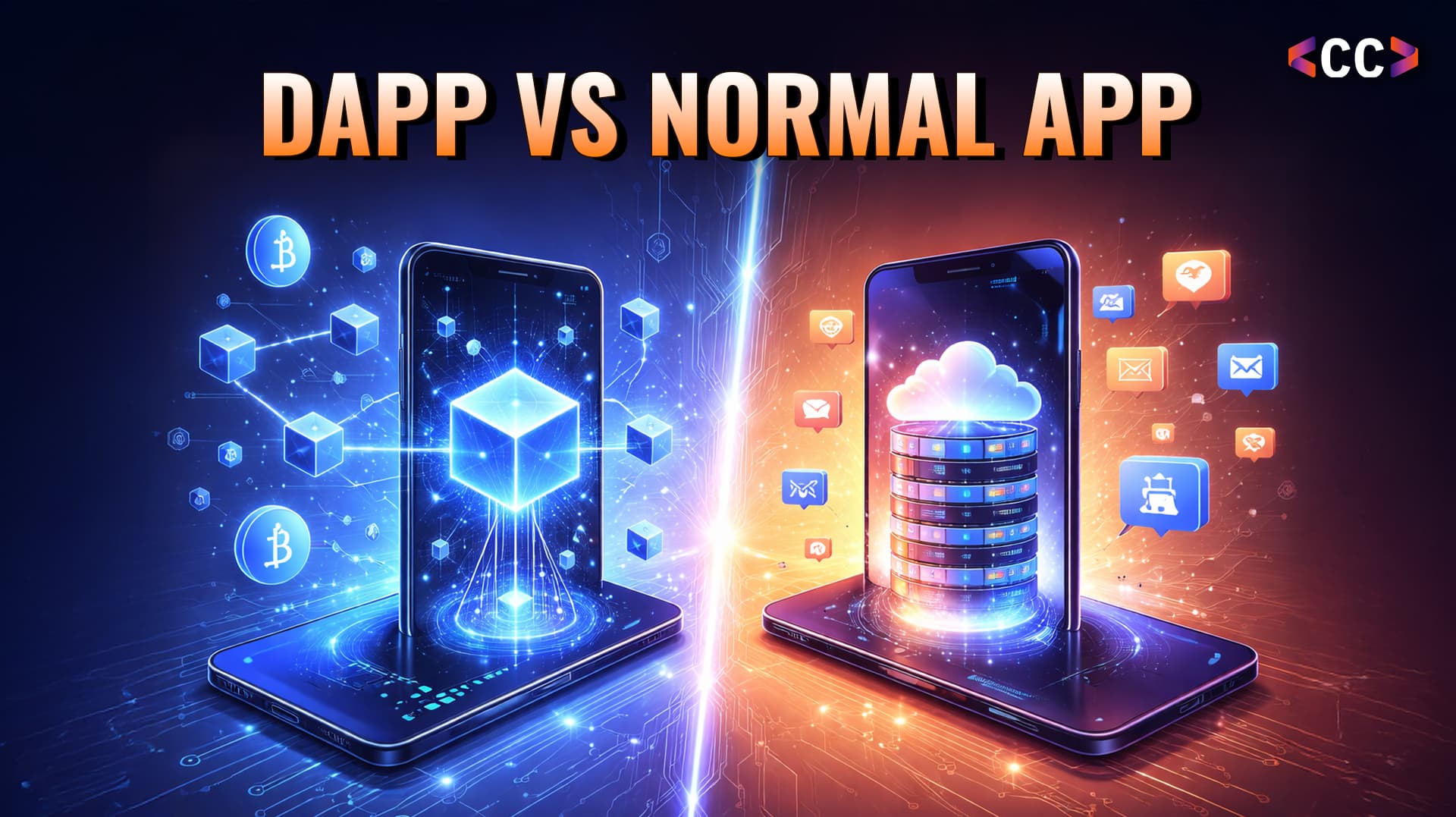
Why the dApp vs Normal App Debate Matters More Than Ever
As digital ecosystems continue to evolve, businesses and users are increasingly evaluating the difference between a dApp and a normal app. Traditional applications have dominated the market for decades, offering speed, simplicity, and centralized control. However, with the rise of blockchain technology, decentralized applications or dApps are redefining how trust, ownership, and security function in the digital world.
Understanding the dApp vs normal app distinction is no longer optional. It directly impacts data privacy, scalability, compliance, and long-term innovation. Whether you are a startup founder, enterprise leader, or tech enthusiast, choosing between a dApp and a normal app can shape your product’s future success.
What Is a Normal App? Understanding Centralized Application Architecture
A normal app refers to a traditional application built on centralized infrastructure. These apps operate on a client-server model, where all data processing, storage, and control are handled by a single organization or authority.
In a normal app, users rely on the service provider for:
- Data security
- Platform availability
- Feature updates
- Compliance management
Examples of normal apps include social media platforms, e-commerce apps, and enterprise SaaS solutions. This model enables faster performance, smoother user experiences, and easier scalability—making the normal app ideal for mass adoption and consumer-focused products.
What Is a dApp? A Simple Explanation of Decentralized Applications
A dApp, or decentralized application, runs on a blockchain network rather than centralized servers. Instead of a single authority controlling the system, a dApp operates through smart contracts that automatically execute predefined rules.
Key characteristics of a dApp include:
- Decentralized data storage
- Open-source logic
- Trustless transactions
- User-controlled digital assets
Unlike a normal app, a dApp removes intermediaries, enabling direct peer-to-peer interactions. This makes dApps especially powerful for finance, identity management, gaming, and digital ownership use cases.
dApp vs Normal App: Key Differences You Must Know
When comparing a dApp vs normal app, several core differences stand out:
- Centralization vs Decentralization
A normal app relies on centralized servers, while a dApp distributes control across a blockchain network. - Data Ownership
In a normal app, companies manage and store user data. In a dApp, users retain ownership of their data through cryptographic wallets. - Transparency
A dApp offers public, verifiable transactions and open smart contracts, whereas a normal app typically operates behind proprietary systems. - Security Model
While a normal app is vulnerable to single-point failures, a dApp benefits from distributed security, reducing the risk of centralized breaches.
Pros and Cons of dApp and Normal App Development
Advantages of a dApp
- Greater transparency and trust
- No centralized authority
- Enhanced user control
- Immutable transaction records
Limitations of a dApp
- Slower performance
- Higher development complexity
- Limited scalability
- Steeper learning curve for users
Advantages of a Normal App
- Faster response times
- Seamless user experience
- Easier maintenance
- Proven scalability
Limitations of a Normal App
- Centralized data risks
- Reduced transparency
- Higher dependency on service providers
Choosing between a dApp and a normal app depends on the balance between decentralization and usability.
Real-World Use Cases: When to Choose a dApp or a Normal App
A dApp is ideal when:
- Trustless transactions are required
- Digital ownership is critical
- Transparency is a priority
- Financial or asset-based systems are involved
Examples include decentralized exchanges, NFT marketplaces, and blockchain-based identity platforms.
A normal app is the better choice when:
- High-speed performance is essential
- Mass user adoption is the goal
- UX simplicity matters
- Traditional payment systems are required
Food delivery apps, ride-sharing platforms, and enterprise tools continue to thrive as normal apps.
The Future of Application Development: dApp, Normal App, or Hybrid?
Looking ahead, the future is not strictly dApp vs normal app—it is increasingly hybrid. Many organizations are combining blockchain components with traditional infrastructure to create scalable, compliant, and user-friendly solutions.
Hybrid models allow businesses to:
- Use blockchain for trust-critical functions
- Retain normal app performance and UX
- Innovate without sacrificing scalability
This blended approach is shaping the next generation of digital products.
Choosing Between a dApp and a Normal App for Long-Term Success
The decision between a dApp and a normal app ultimately depends on your objectives. If decentralization, transparency, and user ownership are essential, a dApp offers unmatched advantages. If speed, reliability, and mainstream usability are your priorities, a normal app remains the practical choice.
By understanding the dApp vs normal app landscape, businesses and developers can make informed, future-ready decisions—building applications that align with both technological trends and real-world needs.