
Blockchain
4 hours ago
Blockchain in Supply Chain Management: Benefits, Real Use Cases, and How to Get Started
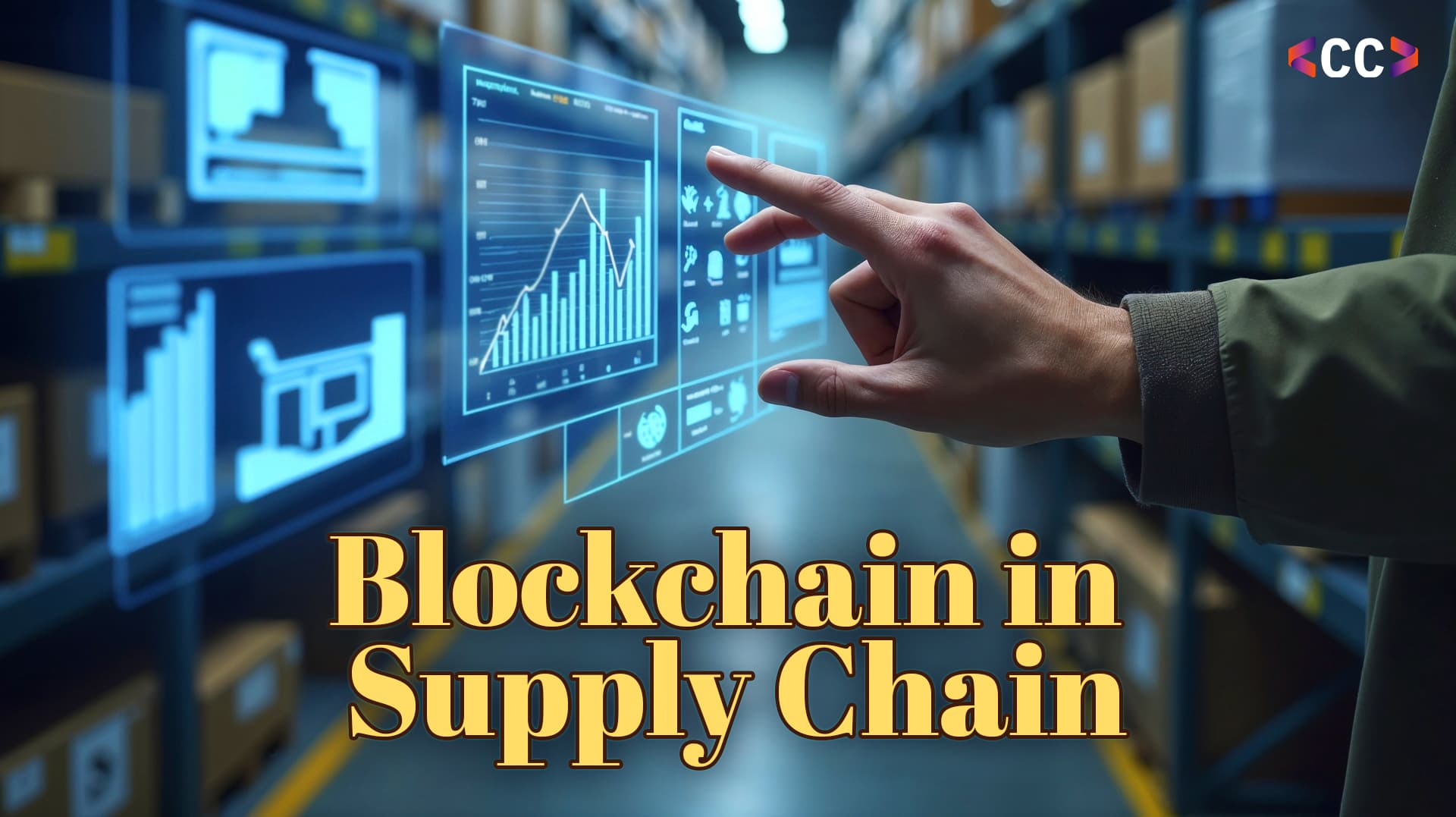
A container of mangoes leaves a farm in Mexico. It travels through a packing facility, a port, a freight vessel, a distribution centre, and finally lands on a supermarket shelf in London. At any point along that journey, something can go wrong – and nobody will know exactly where.
That’s the supply chain problem in a nutshell: too many parties, too little visibility, and too much trust placed in paperwork that can be lost, delayed, or falsified.
Blockchain in supply chain management is changing that. By creating a shared, tamper-proof record of every movement, transaction, and handoff, blockchain gives every party in a supply chain the same real-time picture – without any single entity controlling the data.
This guide explains how it works, where it’s already delivering results, and how your organisation can take the first practical steps.
Why Traditional Supply Chains Are Broken
Modern supply chains are extraordinarily complex. A single consumer product might involve dozens of suppliers, logistics providers, customs authorities, and retailers – each running their own systems, on their own timelines, with their own records.
The result is a set of problems that are frustratingly common:
- Opacity: No single party has full visibility of the chain. When something goes wrong – a contaminated batch, a delayed shipment, a counterfeit product – tracing the source is slow and expensive.
- Fraud and counterfeiting: The World Economic Forum estimates that counterfeiting costs the global economy over $4.5 trillion annually. Paper-based documentation is easy to forge.
- Reconciliation delays: Each party maintains its own records. Reconciling them after a dispute can take weeks and often ends in legal action rather than resolution.
- Compliance burden: Regulatory requirements around provenance, sustainability, and safety are growing. Proving compliance across a multi-tier supply chain with manual records is almost impossible to do efficiently.
These aren’t edge cases – they’re the everyday reality for operations teams managing global supply chains. The question is: what does a better system look like?
How Blockchain in Supply Chain Management Actually Works
A blockchain is a shared digital ledger – a record book that every authorised participant in a network can read, but that no single participant can alter unilaterally.
In a supply chain context, here’s what that looks like in practice:
- Every time a product changes hands – from farm to packer, from packer to freight forwarder, from port to distributor – that event is logged as a new entry (a “block”) on the shared ledger.
- Each entry is timestamped, linked to the previous entry, and cryptographically sealed. It cannot be changed after the fact.
- All authorised participants – suppliers, logistics providers, retailers, regulators – can see the same record in real time.
The result is blockchain traceability: a complete, verified history of every product from origin to destination that everyone can trust, because no single party controls it.
The Role of Smart Contracts in Supply Chain Automation
Traceability is only the first layer. When you add smart contracts on top of blockchain, you move from visibility to automation.
A smart contract can be programmed to trigger a payment to a supplier the moment an IoT sensor confirms a shipment has been received and is within the correct temperature range. No invoice. No approval chain. No delay.
This combination of real-time data and automated execution is what makes blockchain supply chain solutions genuinely transformative – not just a better filing system.
Real-World Blockchain Supply Chain Use Cases
Blockchain in supply chains is no longer experimental. Here are sectors where it’s already creating measurable results:
Food Safety & Provenance
Food retailers and distributors are using blockchain to track products from farm to shelf. In the event of a contamination recall, what previously took days to trace can now be done in seconds – limiting the scope of a recall and protecting consumers. Supermarket chains and global food companies have already deployed this technology across their fresh produce and meat supply chains.
Pharmaceuticals & Anti-Counterfeiting
The pharmaceutical industry loses billions annually to counterfeit medicines – a problem that directly endangers lives. Blockchain enables drug manufacturers to attach a unique, tamper-proof digital identity to every batch that follows the product through the entire distribution chain. Regulators in multiple markets are actively moving toward blockchain-based track-and-trace as a compliance requirement.
Retail & Luxury Goods
Luxury brands are using blockchain to prove the authenticity of high-value goods – handbags, watches, jewellery – at the point of sale and across the secondhand market. Each item carries a blockchain-based digital certificate of provenance that cannot be forged. This simultaneously reduces counterfeiting and creates a new layer of brand trust.
Trade Finance & Cross-Border Logistics
Traditional trade finance relies on physical documents – bills of lading, letters of credit, certificates of origin – that are mailed between parties and manually verified. Blockchain logistics solutions replace these with digital, cryptographically verified documents that settle in hours rather than weeks, dramatically reducing the cost and risk of international trade.
Across every sector, the pattern is consistent: less paperwork, less fraud risk, and faster resolution of disputes.
Key Benefits of Blockchain for Supply Chain Leaders
For a COO or supply chain director evaluating blockchain, these are the business outcomes that matter:
- End-to-end transparency. Every party sees the same real-time picture of goods in transit – reducing finger-pointing and speculation when delays occur.
- Faster dispute resolution. When every event is timestamped and immutable, disputes resolve in days rather than months. There’s no “your records vs. my records” – there’s one shared record.
- Reduced fraud and counterfeiting. Tamper-proof digital records make it significantly harder to introduce counterfeit goods or falsify provenance documentation.
- Streamlined compliance. Supply chain transparency blockchain creates an automatic audit trail for sustainability, safety, and regulatory reporting – without manual data collection.
- Cost savings. Automated processes reduce administrative overhead. Fewer intermediaries, less paper, and faster settlement mean measurable cost reduction.
- Resilience. When disruptions occur, a fully visible supply chain allows businesses to identify alternative suppliers and reroute faster than ever before.
Challenges to Consider Before You Start
As with any significant technology change, the barriers to blockchain adoption in supply chains are real – and worth understanding upfront.
- Multi-party buy-in is essential. A blockchain is only as useful as the number of parties participating in it. If your suppliers aren’t on board, the data will have gaps. Adoption is a change management challenge as much as a technical one.
- Data quality at the source. Blockchain records what it’s told. If a supplier logs incorrect information – intentionally or by mistake – the blockchain faithfully records that error. Garbage in, garbage out. Pairing blockchain with IoT sensors and independent verification helps mitigate this.
- Integration with existing systems. Most supply chains run on ERPs, WMS platforms, and legacy databases. Integrating a decentralized supply chain layer requires careful architecture planning.
- Choosing the right platform. Public blockchains, private networks like Hyperledger Fabric, and consortium chains like TradeLens all have different trade-offs in terms of cost, privacy, and speed. The right choice depends on your industry and partner ecosystem.
None of these challenges are insurmountable – but they do underscore the importance of starting with the right strategy and the right guidance.
How to Implement Blockchain in Your Supply Chain: A Practical Starting Point
The most common mistake organisations make is trying to digitise the entire supply chain at once. A far more effective approach is to start narrow and expand.
- Identify a high-friction point. Where does your supply chain break down most often? Delays at customs? Disputes with a specific supplier? Product recalls you can’t trace fast enough? Start there.
- Define what data needs to be shared. Map the data that needs to flow between parties at that pain point – and who needs access to it. This shapes your platform and governance model.
- Choose the right blockchain platform. Work with a specialist to evaluate whether a private, consortium, or hybrid blockchain fits your use case, your partners, and your compliance requirements.
- Pilot with two or three partners. Run a controlled proof-of-concept with a limited set of supply chain participants. Measure speed, cost, and accuracy against your baseline.
- Scale with evidence. Use the pilot results to build the business case for wider rollout – and to bring more partners onto the network with demonstrated proof of value.
This approach keeps risk low, builds internal confidence, and gives you a clear picture of ROI before committing to a full deployment.
Conclusion: The Supply Chain of the Future Is Already Here
The case for blockchain in supply chain management is no longer theoretical. The technology is mature, the use cases are proven, and the competitive pressure to adopt is growing – driven by regulation, consumer demand for transparency, and the hard lessons of recent global disruptions.
The organisations that act now will gain a significant operational and reputational advantage over those who wait.
The real question isn’t whether blockchain belongs in your supply chain. It’s where to start – and who to start with.
At Chaincode Consulting, we help manufacturers, distributors, retailers, and logistics firms design and deploy blockchain supply chain solutions – from initial strategy through to live implementation.