Blockchain
3 months ago
Blockchain-as-a-Service (BaaS) Explained: How Enterprises Are Adopting Blockchain Faster Than Ever
Why Blockchain-as-a-Service Is Becoming the Go-To Model for Enterprises
Blockchain adoption has moved beyond experimentation—but complexity, infrastructure costs, and talent gaps still slow many organizations down. This is where Blockchain-as-a-Service (BaaS) is reshaping the landscape.
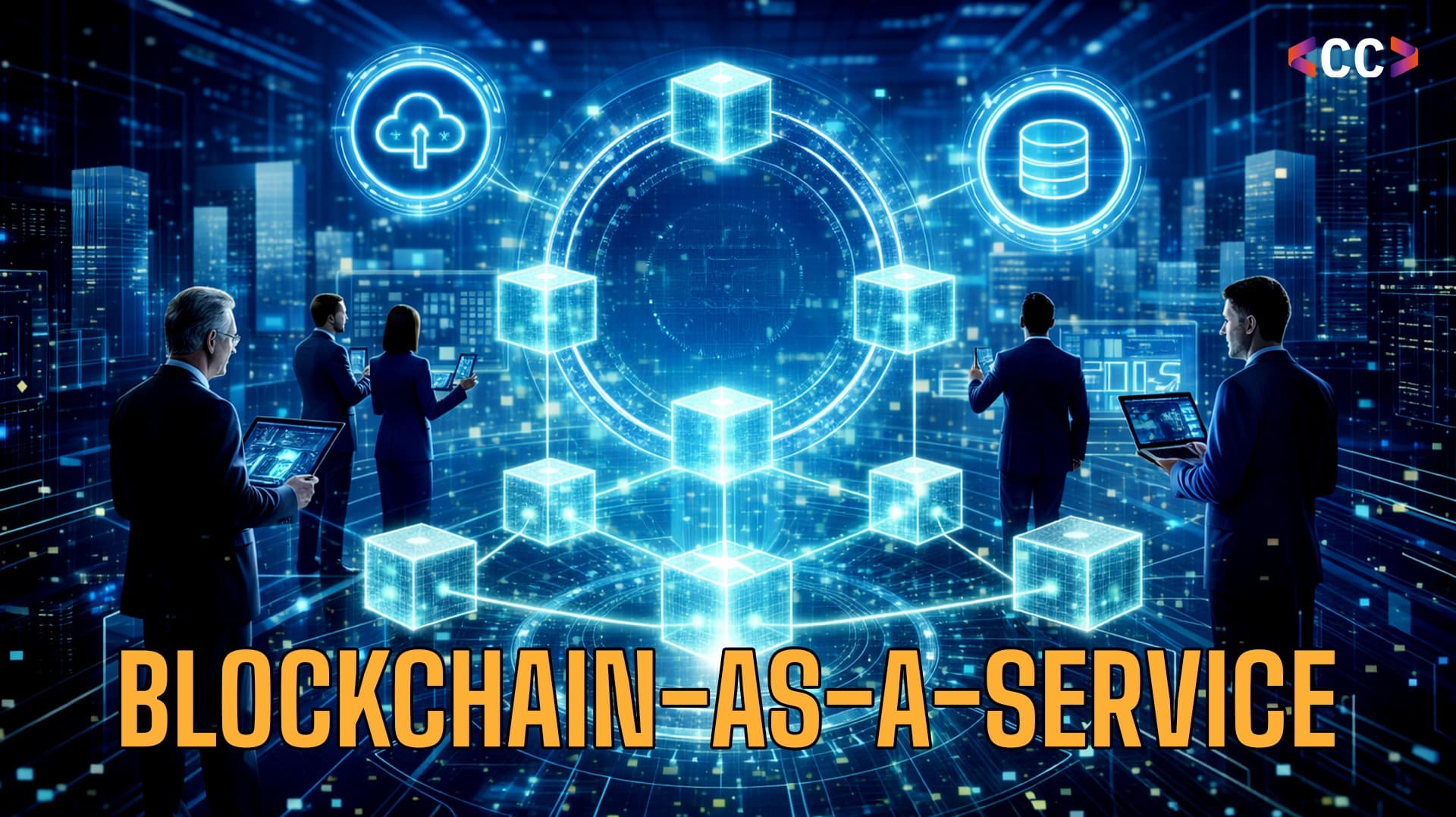
BaaS enables businesses to leverage blockchain technology without managing nodes, networks, or security layers internally. Delivered through cloud infrastructure, it allows enterprises to build, deploy, and scale blockchain applications with the same simplicity that cloud computing brought to traditional IT systems.
As enterprises pursue digital transformation, BaaS is emerging as the most practical path to blockchain adoption—reducing friction while accelerating innovation.
What Is Blockchain-as-a-Service and How Does It Actually Work?
Blockchain-as-a-Service (BaaS) is a cloud-based blockchain delivery model where a third-party provider handles the underlying blockchain infrastructure, security, and maintenance. Businesses access these capabilities through managed platforms, APIs, and developer tools.
Instead of investing in:
- Blockchain node setup
- Network governance
- Ongoing upgrades and security patches
Organizations can focus purely on application logic, smart contracts, and business use cases.
From developing decentralized applications (dApps) to deploying enterprise smart contracts, BaaS simplifies blockchain development while ensuring reliability, scalability, and compliance.
Business Advantages of BaaS: Why Enterprises Are Choosing Managed Blockchain
Adopting BaaS delivers clear operational and strategic benefits:
Faster Time-to-Market
Pre-configured blockchain environments eliminate long setup cycles, allowing teams to move from concept to deployment quickly.
Lower Cost of Blockchain Adoption
Subscription-based pricing removes heavy upfront infrastructure investments, making blockchain more accessible and ROI-driven.
Enterprise-Grade Security
Managed blockchain platforms incorporate encryption, access controls, and continuous monitoring—ensuring secure data management by design.
Scalability Without Complexity
BaaS platforms grow with business needs, supporting increasing transaction volumes without performance bottlenecks.
For organizations exploring blockchain without operational overhead, BaaS provides a balanced, low-risk entry point.
Real-World BaaS Use Cases Across Industries
BaaS is already delivering measurable value across sectors:
Financial Services
Banks and fintechs use BaaS for faster cross-border payments, fraud detection, and immutable transaction records.
Supply Chain & Manufacturing
Blockchain-powered traceability ensures product authenticity, supplier accountability, and real-time visibility across global supply networks.
Healthcare & Life Sciences
Secure patient data sharing, consent management, and tamper-proof medical records are becoming possible through managed blockchain platforms.
These use cases highlight how BaaS turns blockchain from a theoretical innovation into a production-ready enterprise tool.
Leading Blockchain-as-a-Service Platforms Enterprises Trust
Several platforms continue to lead enterprise blockchain adoption:
- Microsoft Azure Blockchain – Strong integration with enterprise IT ecosystems
- Amazon Managed Blockchain – Scalable networks with support for Ethereum and Hyperledger
- IBM Blockchain Platform – Governance-focused solutions for regulated industries
Alongside hyperscalers, specialized blockchain providers are also enabling enterprises to experiment, test, and validate use cases in controlled environments before full-scale deployment.
At ChainCode Consulting, we often see organizations benefit from sandbox-driven adoption models—where blockchain ideas are validated quickly before moving to production. Platforms like SutR, a Web3 sandbox environment, help enterprises safely experiment with blockchain applications, smart contracts, and integrations without disrupting live systems.
How to Choose the Right BaaS Platform for Your Business
Selecting the right BaaS solution requires aligning technology with business goals. Key factors to evaluate include:
- Compatibility with existing systems (ERP, CRM, cloud stack)
- Support for required blockchain frameworks and smart contracts
- Customization and API flexibility
- Security, compliance, and governance capabilities
- Scalability and long-term cost efficiency
Enterprises that start with pilot deployments often achieve faster internal buy-in and clearer ROI before scaling across departments.
Addressing Security, Compliance, and Privacy in BaaS
Security and compliance remain top concerns in blockchain adoption—and modern BaaS platforms are designed with these in mind.
Advanced security measures include:
- End-to-end encryption
- Role-based access controls
- Continuous monitoring and audits
Regulatory readiness is also improving, with platforms supporting compliance frameworks such as GDPR, HIPAA, and industry-specific regulations. Permissioned blockchain models further allow enterprises to balance transparency with data privacy.
When implemented correctly, BaaS offers enterprise-grade security without sacrificing agility.
Why Blockchain-as-a-Service Is the Smartest Way Forward
Blockchain-as-a-Service is no longer just an adoption shortcut—it’s becoming the standard enterprise model for blockchain innovation. By removing infrastructure complexity, BaaS enables organizations to focus on real business outcomes: efficiency, trust, automation, and scalability.
Enterprises that embrace BaaS today are better positioned to innovate faster, reduce operational risk, and stay competitive in an increasingly decentralized digital economy.
The future of blockchain adoption isn’t about building everything from scratch—it’s about building smarter, faster, and more strategically.