
Blockchain
1 month ago
AI Facial Recognition Attendance System: How Smart Workplaces Are Replacing Biometric Time Tracking
Why Businesses Are Moving From Biometric Attendance to AI Facial Recognition
Workplaces are rapidly upgrading their attendance tracking systems, and AI facial recognition is leading this shift. Traditional methods like manual registers, swipe cards, and fingerprint scanners are increasingly inefficient in modern organizations that require real-time data, security, and automation.
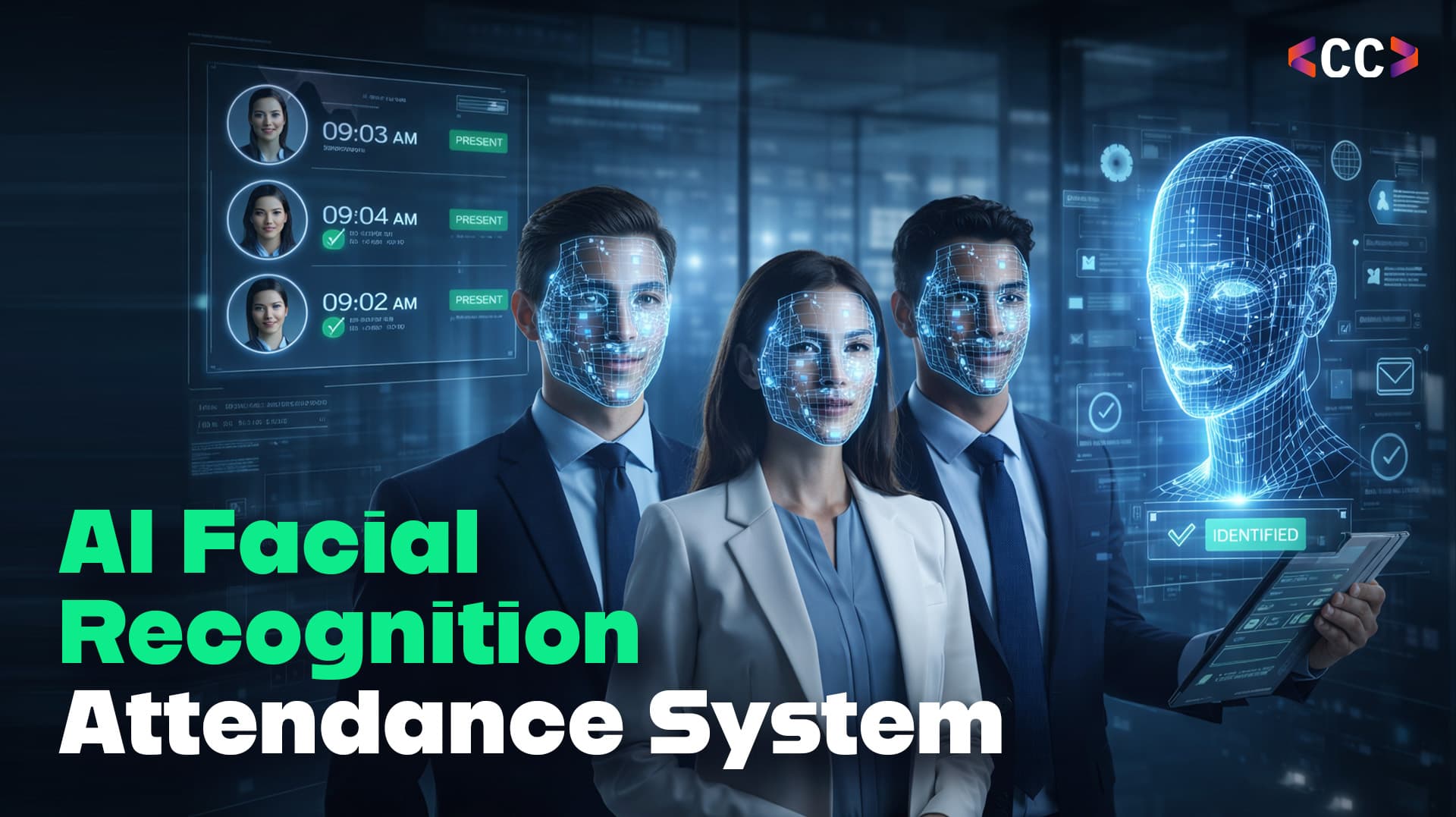
An AI facial recognition attendance system allows employees to simply look at a camera and have their attendance recorded instantly. No physical contact, no cards, and no passwords are required. The system verifies identity in seconds and logs check-in or check-out times automatically.
This transition toward contactless attendance systems improves both operational efficiency and security. Businesses gain accurate attendance records while HR teams eliminate manual reconciliation and payroll errors.
Technology innovators such as ChainCode Consulting are increasingly exploring AI-driven workplace automation solutions where facial recognition integrates with broader security, analytics, and workforce management platforms.
How AI Facial Recognition Attendance Systems Work
At its core, AI facial recognition attendance combines computer vision, biometric identification, and machine learning to verify identities.
The process typically follows three steps:
Face Detection
The system detects a human face through cameras placed at entry points or attendance kiosks.
Feature Mapping
Advanced algorithms analyze facial characteristics—such as eye spacing, jawline structure, and facial contours—to create a secure digital “faceprint.”
Identity Verification & Attendance Logging
The faceprint is compared against a database of registered users. Once a match is confirmed, the system records attendance automatically and syncs data with HR or payroll systems.
Modern systems can recognize faces even with glasses, masks, or lighting variations, improving reliability across real-world environments.
Key Benefits of AI Facial Recognition Attendance for Businesses
Organizations adopting AI-powered attendance systems gain significant operational advantages.
Accurate Attendance Tracking
Because attendance is linked to biometric identity rather than cards or passwords, records become more reliable and audit-ready.
Elimination of Buddy Punching
Employees must be physically present to mark attendance, preventing proxy attendance or time theft.
Real-Time Workforce Visibility
Managers gain instant dashboards showing who is present, late, or absent across locations.
Reduced Administrative Work
Automated attendance logging eliminates manual timesheet processing and reduces HR workload.
Contactless and Hygienic Check-ins
Face recognition removes the need for fingerprint devices or shared surfaces, making it safer for workplaces.
These improvements help organizations reduce payroll leakage, improve productivity, and streamline workforce management.
Real-World Use Cases Across Industries
AI facial recognition attendance systems are being implemented across many industries.
Corporate Offices
Automated check-ins reduce queues and provide accurate employee attendance logs.
Manufacturing and Industrial Facilities
Hands-free attendance works well in environments where workers wear gloves or safety gear.
Schools and Universities
Facial recognition simplifies classroom attendance and improves campus security.
Hospitals and Healthcare Facilities
Contactless attendance helps maintain hygienic environments while managing shift-based staffing.
Remote and Field Workforce
Mobile-based facial recognition combined with geolocation enables accurate attendance tracking outside traditional offices.
The Role of AI Vision Platforms Like DRISHTI in Smart Workplaces
Modern AI attendance systems are evolving beyond simple time tracking. Platforms like DRISHTI, developed by ChainCode Consulting, demonstrate how computer vision can enhance workplace monitoring and operational intelligence.
DRISHTI uses AI-powered video analytics to monitor safety compliance, access control, and operational activity across facilities, helping organizations enforce policies and improve workplace visibility. Systems like this can complement facial recognition attendance by integrating identity verification with security and operational insights.
This combination of computer vision, AI analytics, and automated attendance is shaping the next generation of smart workplaces.
Privacy and Ethical Considerations for Facial Recognition Systems
While AI attendance systems offer powerful advantages, organizations must also address data privacy and ethical AI usage.
Best practices include:
- Transparent employee consent policies
- Secure storage of biometric templates
- Role-based access control for sensitive data
- Compliance with data protection regulations
When implemented responsibly, facial recognition can balance security, efficiency, and employee trust.
How Blockchain Can Make AI Attendance Systems More Secure and Transparent
While AI facial recognition already improves attendance accuracy, integrating blockchain technology can take security and transparency to the next level.
Traditional attendance systems store data in centralized databases, which can sometimes be altered, deleted, or manipulated. By storing attendance records on a blockchain-based ledger, organizations create tamper-proof, immutable records of employee check-ins and check-outs. Every attendance entry becomes a verifiable transaction that cannot be modified without leaving a trace.
This approach provides several advantages:
Tamper-Proof Attendance Records
Blockchain ensures that once attendance data is recorded, it cannot be altered. This is particularly valuable for compliance audits, payroll verification, and labor dispute resolution.
Transparent and Verifiable Audit Trails
Every attendance entry stored on the blockchain contains a timestamp and cryptographic verification. HR teams and auditors can trace records transparently without worrying about manipulation.
Secure Integration with Payroll and HR Systems
Blockchain can automatically trigger smart contract-based payroll calculations, ensuring employees are paid based on verified working hours.
Stronger Data Integrity for Enterprise Systems
When combined with AI facial recognition, blockchain acts as the trust layer that protects attendance data while AI handles identity verification.
Technology innovators like ChainCode Consulting are exploring how AI, blockchain, and computer vision can work together to build more secure and intelligent enterprise systems.
For example, solutions such as DRISHTI demonstrate how AI-powered video analytics can provide operational visibility across workplaces, and when combined with blockchain-backed data storage, organizations can achieve both real-time monitoring and tamper-proof record management.
This convergence of AI facial recognition, blockchain technology, and computer vision is shaping the next generation of secure digital workforce management platforms.
The Future of Workforce Management: AI-Driven Attendance Systems
Attendance tracking is evolving from a simple record-keeping task into a data-driven workforce management tool.
Future AI attendance systems will likely include:
- Workforce analytics and predictive scheduling
- Integration with smart office infrastructure
- Hybrid workforce monitoring
- AI-based workplace safety and compliance monitoring
Organizations that adopt AI early will gain greater operational visibility, improved employee experiences, and stronger workforce insights.
Why AI Facial Recognition Attendance Is the Next Step in HR Digital Transformation
AI facial recognition attendance is redefining how organizations manage time tracking, security, and workforce visibility.
By replacing outdated attendance systems with AI-powered contactless solutions, businesses can improve accuracy, reduce administrative overhead, and enhance workplace security.
As companies continue investing in AI-driven automation and computer vision technologies, attendance management will become faster, smarter, and more integrated with broader digital workplace ecosystems.
For organizations planning their next phase of HR digital transformation, adopting AI facial recognition attendance is no longer just an upgrade—it’s a strategic move toward the future of work.