
Blockchain
4 months ago
How AI Agents Are Redefining Modern Gaming: Smarter NPCs, Adaptive Gameplay, and the Future of Games
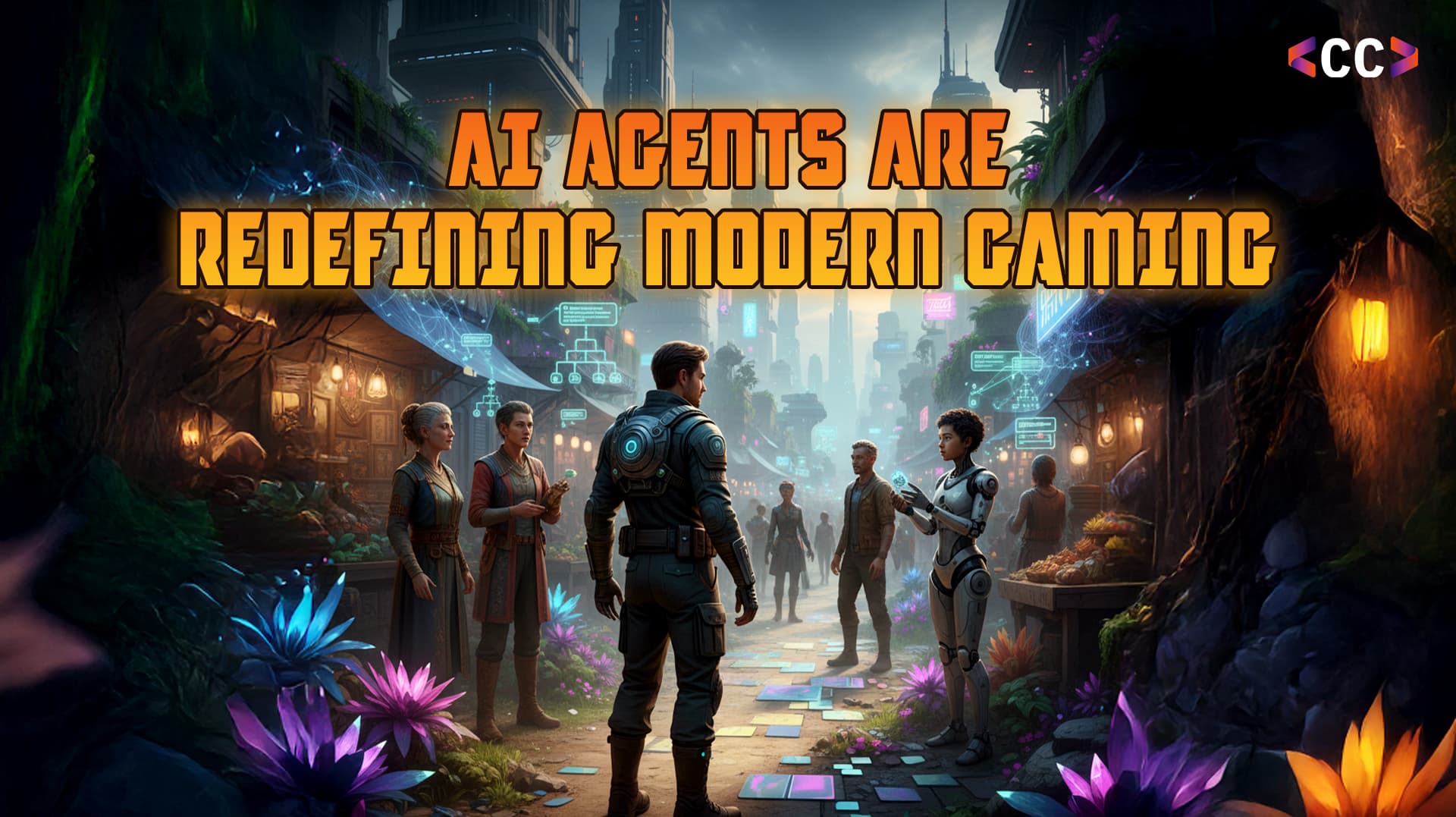
What Are AI Agents in Games? A Beginner-Friendly Explanation of Intelligent Game Characters
AI agents in games are transforming interactive entertainment by introducing intelligence, adaptability, and realism into virtual environments. In simple terms, AI agents are autonomous software-driven entities capable of perceiving their surroundings, making decisions, and taking actions within a game world.
Unlike traditional scripted NPCs that follow predefined rules, modern game AI agents respond dynamically to player behavior and environmental changes. These intelligent game characters analyze real-time inputs—such as player movement, combat strategies, or dialogue choices—and adjust their responses accordingly.
Adaptive AI in gaming takes this even further by allowing agents to learn from player behavior, modify difficulty levels, and evolve strategies over time. This results in gameplay that feels organic, unpredictable, and deeply immersive—key factors driving player engagement in today’s competitive gaming market.
The Evolution of Game AI: From Scripted NPCs to Learning-Based AI Agents
The journey of game artificial intelligence reflects the broader evolution of computing and machine learning. Early video games relied on rule-based AI systems, where NPCs followed simple scripts and predictable patterns. While effective for classic arcade titles, these systems offered limited realism and replayability.
The introduction of behavior trees marked a major advancement. These systems allowed NPCs to make decisions based on conditions and priorities, enabling more dynamic reactions to player actions. Strategy games and RPGs particularly benefited from this shift, as opponents and allies could respond more intelligently during gameplay.
Today, machine learning in games has unlocked a new era. AI agents powered by data-driven models can analyze player behavior, adapt tactics, and improve performance over time. This transition from static scripts to learning-based AI has fundamentally changed how players interact with virtual worlds—making games more challenging, engaging, and replayable.
How AI Agents Enhance Gameplay, Immersion, and Player Retention
AI agents play a crucial role in delivering immersive gameplay experiences that keep players engaged for longer periods. One of the most impactful improvements is the rise of responsive NPCs—characters that react intelligently to player decisions rather than following predictable routines.
Personalized gameplay is another major benefit. AI agents can tailor difficulty levels, story arcs, and in-game interactions based on individual play styles. Whether a player prefers stealth, combat, or exploration, AI-driven systems adjust the experience accordingly.
Emergent gameplay further elevates engagement by enabling unscripted events and outcomes shaped by player-AI interactions. Instead of linear narratives, players encounter evolving scenarios that feel unique each time they play. This dynamic interaction between players and AI agents significantly increases replay value and emotional investment.
Game Genres Transformed by AI Agents and Intelligent NPCs
AI agents are reshaping multiple game genres, delivering deeper realism and strategic complexity.
In role-playing games (RPGs), AI-driven NPCs enable branching narratives, memory-based interactions, and characters that evolve based on player choices. This creates emotionally rich storytelling and personalized game worlds.
Strategy games benefit from intelligent opponents capable of analyzing player tactics and adapting in real time. Instead of exploiting predictable patterns, players must continuously refine their strategies, making gameplay more competitive and rewarding.
Simulation games leverage adaptive AI behaviors to create living ecosystems. Whether managing cities, economies, or virtual societies, players interact with environments that respond logically to changing conditions.
Action and adventure games also see significant improvements, with smarter enemies, cooperative AI allies, and environments that react intelligently—enhancing immersion and challenge across every encounter.
The Technology Powering Modern AI Agents in Games
Behind today’s intelligent gaming experiences lies a sophisticated AI technology stack.
Machine learning for NPCs enables characters to learn from gameplay data, adapt behavior, and improve decision-making. This reduces predictability and creates more human-like interactions.
Reinforcement learning in gaming allows AI agents to learn through rewards and penalties, optimizing their strategies over time. This approach is particularly effective for combat scenarios, tactical decision-making, and cooperative gameplay.
Procedural content generation powered by AI agents has revolutionized game design. Entire worlds, levels, and quests can now be generated dynamically, ensuring unique experiences for every player.
Advanced pathfinding algorithms further enhance realism by enabling NPCs to navigate complex environments intelligently—avoiding obstacles, coordinating with allies, and reacting to player movements seamlessly.
These technologies are increasingly aligned with enterprise-grade AI development practices, similar to those used in advanced AI system design and intelligent agent frameworks adopted across industries.
The Future of AI Agents in Gaming: What Players and Developers Can Expect Next
The future of gaming is deeply intertwined with next-generation AI agents. As AI models become more sophisticated, NPCs will exhibit higher emotional intelligence, long-term memory, and deeper narrative awareness—resulting in truly living game worlds.
Future AI-driven games will offer personalized storylines that evolve uniquely for each player, shaped by cumulative decisions and interactions. Multiplayer environments may also leverage collective AI systems that adapt based on community behavior.
However, these advancements bring important ethical considerations. Responsible AI usage in gaming must address data privacy, algorithmic bias, and player manipulation. Developers who prioritize transparency and fairness alongside innovation will set new industry standards.
As AI consulting and system integration expertise continues to mature, the line between entertainment AI and real-world intelligent systems will continue to blur—unlocking powerful cross-industry innovation.
Why AI Agents Are the Foundation of the Next Gaming Revolution
AI agents are no longer a futuristic concept—they are the backbone of modern game design. By enabling adaptive gameplay, intelligent NPCs, and immersive virtual worlds, AI agents redefine what players expect from interactive entertainment.
Studios that embrace AI-driven development gain the ability to craft richer narratives, scalable worlds, and deeply engaging experiences that evolve with their audience. As artificial intelligence continues to advance, AI agents will remain central to innovation—not just in gaming, but across the broader digital ecosystem.
The next era of gaming belongs to those who harness intelligence, adaptability, and creativity—and AI agents are leading the way.